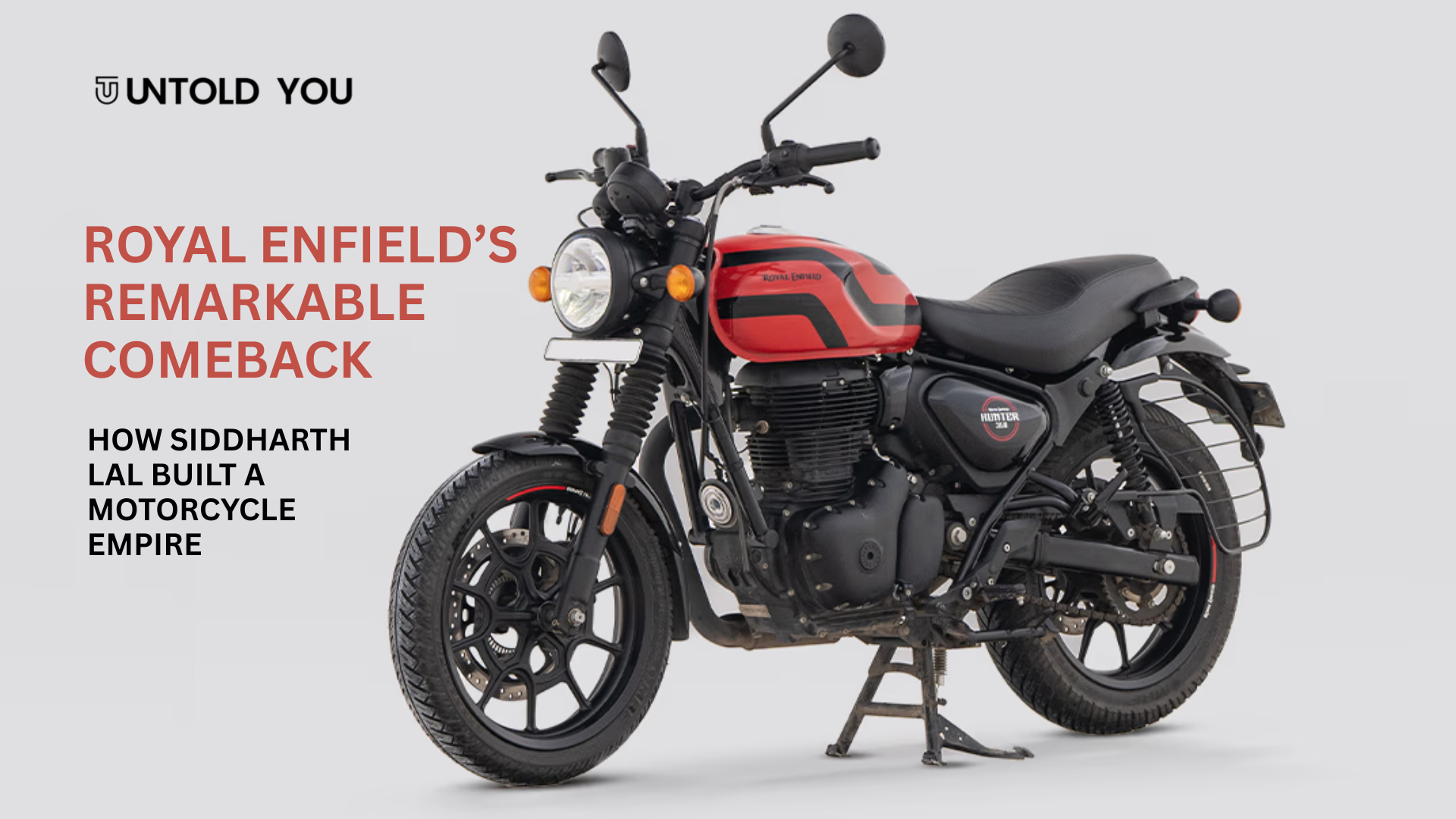
Royal Enfield is not just a motorcycle brand—it’s an emotion. The deep thump of its engine, the rugged design, and the cult-like community have made Royal Enfield a household name in India and a growing global phenomenon. But few people know that this iconic brand was once on the verge of irrelevance.
In the early 2000s, Royal Enfield was struggling with outdated technology, falling sales, and stiff competition from modern, fuel-efficient motorcycles. Many believed the brand’s golden era was over. That’s when Siddharth Lal stepped in—and rewrote history.
This is the inspiring success story of how Royal Enfield went from near collapse to becoming the world’s largest mid-size motorcycle manufacturer.
The Early Days of Royal Enfield
Royal Enfield’s roots go back to 1901 in England, making it one of the oldest motorcycle brands in the world. The brand earned global recognition during World War II when its motorcycles were used by the British Army.
In 1955, Royal Enfield entered India through a partnership with Madras Motors. Over the years, the Bullet became synonymous with durability and power, especially among the Indian Army and police forces.
However, by the 1990s, the motorcycle market had changed dramatically.
When Royal Enfield Almost Faded Away
By the late 1990s and early 2000s, Royal Enfield was in serious trouble:
- Motorcycles were heavy, unreliable, and outdated
- Frequent breakdowns damaged brand trust
- Younger customers preferred sleek, fuel-efficient bikes
- Japanese manufacturers dominated the market
- Annual sales hovered around 25,000–30,000 units
Many industry experts believed Royal Enfield would eventually shut down or remain a niche relic of the past.
Enter Siddharth Lal: The Turning Point
In 2000, Siddharth Lal, a Stanford and Harvard-educated businessman, joined Eicher Motors, the parent company of Royal Enfield. By 2006, he became the CEO.
Instead of abandoning the brand, Lal made a bold decision:
“We won’t compete on speed or mileage—we’ll compete on emotion.”
This mindset changed everything.
The Bold Strategy That Changed Royal Enfield Forever
1. Rediscovering the Brand’s Soul
Instead of copying Japanese bikes, Siddharth Lal leaned into what made Royal Enfield unique:
- Classic design
- Heavy metal body
- Signature thumping sound
- Vintage riding experience
Royal Enfield stopped chasing trends and started owning its identity.
2. Modern Technology, Classic Feel
One of the biggest challenges was balancing nostalgia with reliability.
Key improvements included:
- New engines (Unit Construction Engine – UCE)
- Better braking systems
- Improved suspension
- Reduced vibrations
- Compliance with global emission norms
The bike felt old-school but performed like a modern machine.
3. Building Products, Not Variants
Instead of launching dozens of models, Royal Enfield focused on few iconic motorcycles, each with a strong personality:
- Classic 350
- Bullet 350
- Thunderbird
- Interceptor 650
- Continental GT 650
- Himalayan
Each launch created excitement and reinforced brand loyalty.
Creating a Lifestyle, Not Just a Motorcycle
Riding Communities & Events
Royal Enfield didn’t just sell bikes—it built a culture.
- Rider clubs across India
- Long-distance ride events
- Custom motorcycle festivals
- Brand-owned riding gear
Events like Rider Mania turned customers into lifelong brand advocates.
Marketing Without Discounts
Unlike competitors, Royal Enfield:
- Rarely offered discounts
- Avoided celebrity endorsements
- Focused on storytelling and rider journeys
This premium positioning made Royal Enfield aspirational.
Manufacturing Excellence & Global Expansion
New World-Class Plants
Royal Enfield invested heavily in manufacturing:
- Oragadam (Tamil Nadu)
- Vallam Vadagal (Tamil Nadu)
These plants helped improve:
- Quality control
- Production scale
- Export readiness
Going Global
Royal Enfield expanded aggressively into:
- UK
- USA
- Europe
- Latin America
- Southeast Asia
It positioned itself as an affordable premium motorcycle in global markets.
The Numbers That Tell the Success Story
- Sales grew from ~25,000 bikes/year to 900,000+ bikes annually
- Market leader in 250cc–750cc segment globally
- Exports to 60+ countries
- One of India’s most loved lifestyle brands
Royal Enfield became a case study in brand revival and strategic leadership.
Leadership Lessons from Siddharth Lal
- Don’t abandon legacy—reimagine it
- Clarity of brand positioning is power
- Emotions drive stronger loyalty than features
- Focus beats diversification
- Community building is long-term marketing
Siddharth Lal proved that patient capital, strong vision, and respect for brand DNA can create magic.
The Road Ahead for Royal Enfield
Royal Enfield is now focusing on:
- Electric motorcycles (future-ready strategy)
- New global platforms
- Enhanced rider experiences
- Sustainable manufacturing
From a struggling legacy brand to a global motorcycle empire, Royal Enfield’s journey is far from over.
FAQs: Royal Enfield Success Story
1. Who is the owner of Royal Enfield?
Royal Enfield is owned by Eicher Motors Limited, with Siddharth Lal as its Managing Director and CEO.
2. When did Siddharth Lal join Royal Enfield?
Siddharth Lal joined Eicher Motors in 2000 and became CEO in 2006, leading Royal Enfield’s transformation.
3. Why is Royal Enfield so popular in India?
Royal Enfield is popular due to its classic design, powerful engine sound, emotional connect, riding culture, and strong brand identity.
4. Is Royal Enfield successful globally?
Yes, Royal Enfield exports motorcycles to over 60 countries and is the world’s largest manufacturer in the mid-size motorcycle segment.
5. What is the biggest lesson from Royal Enfield’s success?
The biggest lesson is that authentic branding, emotional connection, and long-term vision can revive even a declining legacy brand.